-
Benefits of Google Reviews for Local SEO Success

In the digital arena today, online reviews essentially play a pivotal role in urging consumers to make their choices. Among several review sites, Google Reviews is the most powerful and can substantially affect a business’s credibility and online visibility. The benefits of google reviews go beyond reputation management. It is perhaps the most powerful way of driving Local SEO, a growth in search engine results for businesses.
They are a part of the tool competition that boosts up for linking bigger ratings. Businesses have to make the most of them in setting up a good foothold in local areas. The article will talk about how Google Reviews influence Local SEO-the advantages of it for businesses-and the top productive ways to successfully optimize it towards boosting the search rankings.
What Are Google Reviews?
Google Reviews serve as a qualitative and quantitative assessment/input from customers who have accessed the business’s Google profile via Google My Business (GMB). These reviews are visible in Google search results and Google Maps and give insight into customer satisfaction.The benefits of Google Reviews include more brand credibility, customer trust, and local search rankings.
It allows customers to assess businesses between 1 and 5 stars and write extensive reviews of their experiences. Given the fact that Google cherishes user-generated content, gathering a maximum number of positive reviews can make a difference in the way the business is found online at large.
How Google Reviews Influence Local SEO
When ranking local businesses, Google’s algorithm relies on a variety of factors, and Google Reviews serve as an important ranking signal. Here is how Google Reviews help with Local SEO:
- Google’s Local Pack Ranking
- The boxed area at the top of local search results is Google’s “Local Pack”. The more positive Google Reviews a business receives, the higher its chances of appearing in this section and getting visibility.
- Review Quantity, Quality, and Recency
- benefits of Google Reviews have an impact on search ranking factors. The free flow of new reviews signals to Google that a business is in operation and is relevant. Quality reviews with deep feedback are helpful for ranking better.
- User Engagement and Click-Through Rates (CTR)
- Better-rated businesses get more clicks. A good review profile attracts potential customers to your business, thus increasing the amount of time they spend on your site while lowering bounce rates, which is an important metric for search engine optimization.
Key Benefits of Google Reviews for Local SEO
Google Reviews play a crucial role in boosting local SEO by enhancing credibility, increasing visibility, and driving customer engagement. here describe some benefit:
1. Higher Local Search Rankings
The major benefits of positive Google Reviews is the impact they have on local search rankings. Google prizes genuine customer comments, and the greater the number of positive reviews a business gets, the more likely it is to outperform a competing business receiving fewer reviews. If the satisfied customers are encouraged to leave positive feedback, the business’s standing in Google’s Local Pack could be strengthened, ultimately helping it with search visibility.
2. Increased Click-Through Rates (CTR)
Search results show star ratings from Google Reviews. It thus makes a business stand out. Increased star ratings result in a higher CTR and lead Google to know if the business is relevant to users. Higher CTR means better rankings and consequently increased organic traffic.
3. Enhanced Credibility and Trust
Online users tend to accept the veracity of customer reviews as much as a word from an acquaintance. The benefits of Google Reviews would build credibility and reassure potential customers that they are making the right selection. Businesses that enjoy a healthy review profile gain their customer’s confidence, which in turn increases conversion rates.
4. Boosted Customer Engagement
Google favors businesses that engage with their audience. Following the Google Review Trend, businesses should actively respond to feedback—whether positive or negative—to show they value customer opinions. This increased engagement encourages more user interactions, ultimately enhancing SEO rankings.
5. Competitive Advantage Over Local Businesses
If lots of Google Reviews are accumulated, they put the business ahead of the competition. When customers are given two or more options to choose from, almost always, the business with the better rating and reviews gets selected. This means that more customers would be required to be retained and convinced to return.
How to Use Google Reviews for SEO Optimization
Leverage Google Reviews for SEO optimization by actively collecting, responding to, and managing reviews to improve search rankings and online credibility. here describe uses of google reviews:
1. Embedding Google Reviews on Your Website
The benefits of Google Reviews is that they can provide fresh user-generated content. Embedding Google Reviews on your website can improve Local SEO in the following ways:
- Dwell Time: When visitors come from all directions and spend more time reading reviews on your site, reducing the chances of bounce backs
- Trust Signals: Authenticating genuine reviews creates credibility and changes people’s buying patterns.
- Keyword-Rich Content: User-generated content has human-centric keywords, thus fueling SEO.
To embed Google Reviews, businesses can use Google’s API or third-party tools like Elfsight or Tagbox to integrate review widgets seamlessly.
2. Using a Google Review Widget for SEO
A Google Review Widget is a plugin that displays customer feedback on your website in real time. This tool naturally boosts Local SEO by:
- Energetic Revamping of the Content: It continually refreshes the reviews to give the impression of freshness to search engines.
- Motivating Retypers: Public display of reviews coax a consumer into feeding back.
- Accommodating Trust Building: Live display of positive reviews increases the authenticity factor.
The Google Review Widget tools mainly include WidgetPack, EmbedSocial,Tagembed and ReviewsOnMyWebsite. Such widgets can enable businesses to promote Google Reviews and enhance their search visibility.
Best Practices to Leverage Google Reviews for Local SEO
- Encourage Customers to Leave Reviews
- Ask satisfied customers to share their experiences on Google.
- Use email follow-ups, QR codes, or website prompts to request reviews.
- Respond to All Reviews
- Engage with both positive and negative feedback.
- Acknowledge customer concerns and show appreciation for their input.
- Avoid Fake Reviews
- Google penalizes businesses that use fake or incentivized reviews.
- Authentic customer feedback is key to sustaining Local SEO benefits.
- Optimize Your Google My Business (GMB) Profile
- Ensure business information is accurate and up-to-date.
- Regularly update your GMB profile with new photos, posts, and offers.
- Monitor and Manage Your Reviews
- Use reputation management tools like BrightLocal or Podium to track and analyze customer feedback.
- Address negative reviews promptly to maintain a strong online reputation.
Conclusion
The benefits of Google reviews are more than just customer feedback; they ensure Local SEO success. Succinctly put, businesses that actively collect, respond to, and showcase their reviews acquire a competitive edge, improved search rankings, and increased customer trust.
Thus, your SEO strategy can be further enhanced by embedding Google reviews on your site using a Google Review Widget. Successful implementation of best practices in review management would ensure a long-term hold on local search rankings.
- Google’s Local Pack Ranking
-
Are Google Product Reviews the Key to E-Commerce Success?

E-commerce today leans entirely on reviews-online reviews stand as the spine to e-commerce success. Customer reviews influence their purchasing decision almost entirely. Hence, businesses must take that into elaborate trust-building processes that lead to their sales deliveries. Of all online review platforms for products, free Google Product reviews are perhaps the most dominant. Do they represent e-commerce’s secret to success? To find out how Google Product Reviews affect online traders and techniques to maximize them, read on.
Understanding Google Product Reviews
Consumer product reviews on Google’s platform are known as Google Product Reviews. This sort of review appears on search results, Google Shopping, and sometimes even on Google Ads. In-depth product reviews with real value to potential buyers are rewarded by Google’s algorithms instead of simple star ratings. The intent of these reviews is to showcase expert opinion, detailed comparisons, and actual use-cases rather than generic reviews.
How Google Product Reviews Work
Google has a complex system to assess reviews and see how relevant and credible they are. Elements like review length, the use of original pictures or videos, and unique insights into the product all contribute to the ranking of that review. After Google’s Reviews Update, businesses should focus on giving unique and valuable product-related information instead of relying solely on automated or superficial feedback.
The Role of Google Product Reviews in E-Commerce Success
1. Influencing Purchase Decisions
The nature of customers is that they are generally hesitant while making purchases online, especially since they cannot physically examine a product. Google Product Reviews serve as one type of trust signal helping consumers to make informed decisions. Detailed, honest reviews diminish perhaps a little uncertainty, thereby increasing conversion rates.
A product with plenty of quality reviews is more likely to convince a potential buyer to hit the “Add to Cart” button. The more a business encourages customers to leave detailed feedback, the more consumer confidence they create, resulting in greater sales.
2. Boosting Search Rankings and Visibility
The Google algorithm thus prefers Google Product Reviews that have some depth and relevance, meaning it will spawn up various products with good content rich reviews on searching. The new Product Reviews Update rewards such content as offering meaningfully insightful reviews in which e-commerce businesses, in turn, can gain better positions with organic ranking.
Constructing and gathering high-quality Google Product Reviews thus practically means for online stores visibility, traffic, and ultimately, sales benefit.
3. Enhancing Credibility and Brand Reputation
Positive Google Product Reviews not only generate foot traffic but enhance the reputation of a brand. Potential customers that observe a business with a distinctly positive history of satisfied customers are likely to muster up trust in that business. Feedback on the other hand, businesses that either have none or predominantly bad ones could struggle to establish credibility.
How Google’s Product Reviews Update Affects Sellers
Google’s Product Reviews Update is designed to prioritize in-depth, well-researched reviews over generic or automated ones. This means that businesses can no longer rely on short, unhelpful comments to rank higher. Instead, they must encourage customers to leave meaningful reviews that cover real experiences, pros and cons, and comparisons to similar products. Utilizing a Google review widget can help businesses showcase authentic customer feedback directly on their website, making it easier for potential buyers to access detailed and credible insights.
Key factors that Google considers in its Product Reviews Update include:
- Originality: Does the review contain unique insights rather than rehashed manufacturer descriptions?
- Depth: Is the review detailed and informative, rather than just a few words?
- Visual Elements: Are there user-uploaded photos or videos showcasing real product usage?
- Comparative Analysis: Does the review compare the product to other similar products?
Adapting to these guidelines is essential for e-commerce businesses that want to stay competitive in search rankings. Implementing a Google review widget can further enhance credibility and engagement by displaying verified reviews that meet Google’s quality standards.
Strategies to Get High-Quality Google Product Reviews
To maximize the benefits of Google Product Reviews, businesses should actively encourage customers to leave genuine feedback. Here are some proven strategies:
1. Ask for Reviews at the Right Time
Timing is of the essence when you need to ask customer Reviews. The best time to make such a request is when the consumer has spent enough time with the product to know it inside-out, but fresh in their mind are the feelings associated with using it. An email asking for product reviews within a week or two post-purchase may be really useful.
2. Provide Incentives (Without Violating Google’s Policies)
There are many creative options available for encouraging customers to leave genuine reviews, including offering discounts on future purchases, early access to new products, or giving them entry into a giveaway-as long as cash is not involved or manipulation is not present.
3. Make Leaving a Review Easy
Streamline the reviewing process by linking directly to the Google Product Reviews page. Place an appropriate call to action for customers in post-purchase emails or print QR codes on the package to facilitate customer review submissions. Staying ahead of the Google Review Trend ensures businesses adapt to evolving customer expectations and maximize the impact of authentic, high-quality reviews.
4. Respond to Reviews (Both Positive and Negative)
Engaging with customers who leave Google Product Reviews demonstrates that you value their feedback. Thank customers for positive reviews and professionally address any concerns in negative reviews. This not only helps retain customers but also improves brand image. Additionally, embedding Google reviews on your website allows businesses to showcase authentic customer feedback, building trust with potential buyers and enhancing credibility.
The Challenges and Risks of Google Product Reviews
1. The Threat of Fake Reviews
One major challenge with Google Product Reviews is the presence of fake reviews—both positive and negative. Some businesses attempt to manipulate their ratings by purchasing fake reviews, while competitors might leave false negative reviews to harm a brand’s reputation. Google has strict policies against fake reviews and actively removes fraudulent content. Businesses should focus on obtaining authentic feedback rather than trying to game the system.
2. Managing Negative Reviews
No business is perfect, and negative reviews are inevitable. However, how a company responds to them can make a significant difference. Addressing complaints professionally and offering resolutions can turn unhappy customers into loyal ones. Additionally, having a mix of positive and constructive reviews often appears more credible than an unrealistic 5-star rating across the board.
Case Studies & Real-World Examples
Example 1: Small Business Boosts Sales with Google Product Reviews
A small e-commerce store selling handmade skincare products saw a 40% increase in sales after optimizing its Google Product Reviews strategy. By encouraging customers to leave detailed feedback and responding to every review, they built trust and improved their search rankings.
Example 2: E-Commerce Giant Faces Challenges with Review Manipulation
A well-known online retailer faced a PR crisis after being exposed for incentivizing fake Google Product Reviews. As a result, Google penalized their rankings, causing a significant drop in sales. This case highlights the importance of maintaining ethical review practices.
Conclusion
So, are Google Product Reviews the key to e-commerce success? The answer is yes and no. While they are undoubtedly a powerful tool for driving sales, improving search visibility, and building credibility, they are just one piece of the puzzle. A successful e-commerce business must combine strong product quality, excellent customer service, and strategic marketing with an effective Google Product Reviews strategy.
To thrive in the competitive world of online retail, focus on gathering high-quality, authentic reviews and using them to enhance customer trust. By doing so, you can maximize your brand’s potential and unlock new growth opportunities.
- Originality: Does the review contain unique insights rather than rehashed manufacturer descriptions?
-
Google Review Trends: What Businesses Should Watch

Google reviews are crucial to a company’s reputation and visibility in the current digital world. People now frequently rely their purchasing decisions on internet reviews, so it’s critical for companies to stay abreast of Google review trends in order to retain their credibility and attract new clients.
Google’s reputation for regularly changing its review-related policies and algorithms means that businesses must, of course, adjust their strategies accordingly. Therefore, in this post, we’ll talk about some of the latest developments in the Google review space as well as the things busy businesses need to be aware of in 2025 and beyond.
1. The Growing Impact of Google Reviews on SEO
A huge Google reviews trend has been the influence reviews have on local search engine optimization (local SEO), and this is something businesses should be focusing on. Google considers customer reviews to be one of the strongest ranking factors that determine inbound business from Google Search and Google Maps results.
Key Trends in Review-Based SEO:
- Businesses with a flood of good reviews tend to rank higher in local search results.
- New and relevant reviews improve both CTR and customer trust.
- Google’s algorithms reward businesses that actively engage with their reviews.
Recommended Actions for Businesses:
- Encourage satisfied customers to leave reviews regularly.
- Set up a Google Business Profile (GBP) with strategic keyword placement and accurate business details.
- Use a Google review widget on your website to showcase positive reviews and encourage more customer feedback.
- Monitor reviews and respond in real time to enhance customer engagement and boost rankings.
A Google review widget not only builds trust by displaying recent customer feedback directly on your site but also encourages more users to leave reviews, further strengthening your local SEO efforts.
2. Increased Focus on Review Authenticity & Trust
With the growing use of sham reviews and persistent spamming, Google has resurfaced its policies for review moderation. It is vital for businesses to keep an eye on this Google review trend since fake and incentivized reviews can land them penalties up to profile suspension.
How Google Is Improving Review Authenticity
- Advanced AI used to detect and filter out fake reviews.
- Stricter policies against incentivized reviews.
- High emphasis on verified and quality user-generated content.
What Should Really Businesses Follow?
- Do not buy fake reviews or offer incentives for reviews.
- Report fake reviews to Google for removal.
- Instruct real customers for detailed, authentic experiences.
3. The Rise of Video and Image Reviews
The latest Google review trend that has gained momentum at an ever-increasing speed is the use of visual media by the customer in writing reviews. More users are attaching photos and videos to their reviews; thus, they can provide a true account of a product or service.
Importance of Visual Reviews:
- Photo and video reviews result in maximized engagement.
- Authentic user-generated content increases customer trust in acceding to businesses.
- Search results may prioritize visual-rich reviews on Google.
What Businesses Should Do:
- Encourage your customers to add images/videos into their reviews.
- Feature user-generated content top pages and social media sites.
- Ensure that your business environment and products have visual apps
4. AI’s Role in Review Filtering & Analysis
AI and machine learning have become integral to Google review trends, enabling businesses to analyze customer feedback at scale. One key area where AI plays a crucial role is in Google Product Reviews, ensuring that authentic, high-quality reviews influence rankings while filtering out spam and fake feedback. Google’s AI-driven spam detection mechanisms help businesses by allowing only genuine customer reviews to pass through, improving credibility and visibility.
AI in Review Management:
- AI sentiment analysis helps businesses identify trends in consumer feedback.
- Google uses artificial intelligence to detect and filter out fake reviews, particularly in Google Product Reviews.
- AI-powered tools generate automated responses for general customer concerns, enhancing engagement.
What Businesses Need to Do:
- Leverage artificial intelligence to track review sentiment and customer preferences.
- Use AI-generated insights to refine the customer experience.
- Properly monitor flagged reviews to prevent genuine feedback from being removed.
- Optimize Google Product Reviews by encouraging detailed, authentic feedback that aligns with AI-driven ranking factors.
With AI shaping the landscape of Google Product Reviews, businesses that embrace these technologies can gain a competitive edge in review management and local SEO.
5. The Influence of Review Replies on Customer Perception
Yet another Google review trend affecting business success is the power of responding to reviews. Customers expect companies to communicate with them regarding their feedback, and Google favors businesses that actively engage in responses. Additionally, maintaining a strong presence on customer review websites can enhance credibility and improve search visibility.
Why Response Matters:
- 89% of consumers read business responses before making their own choice.
Thoughtful responses build brand trust and loyalty. - Engagement leads to a friendliness bonus in Google, gaining more visibility in local rankings.
What Businesses Should Do:
- Reply to every review—good, bad, or otherwise—within 24-48 hours.
- Ensure responses are tailored rather than generic.
- Handle negative reviews respectfully and provide solutions.
- Actively manage your presence on customer review websites to maintain a positive brand image and encourage new feedback.
By leveraging Google reviews and engaging on customer review websites, businesses can strengthen relationships with their audience and improve local SEO performance
6. Google’s Evolving Review Policies & Compliance
Google keeps upgrading its review policies. Hence, businesses need to keep up with these changes. The recent changes that were put into effect are aimed at preventing tortious and misleading reviews and ensuring a transparent review system.
Recent Policy Updates:
- Fake and incentivized reviews are to be removed with stricter measures.
- Focus shall be given to verifying users and authenticating accounts.
- Punitive measures shall be taken against violators of Google’s review guidelines.
What Businesses Should Do:
- Stay updated on Google’s latest review policies.
- Google reviews management and audit should be done regularly for compliance.
- Educate employees about ethical practices in the collection of reviews.
7. Predicting the Future: What’s Next for Google Reviews?
The future of Google review trends will favor proactive businesses that take charge of managing their online reputation. As technology evolves, Google Reviews Automation will play a significant role in streamlining review management and improving business credibility.
Forthcoming Trends:
- AI-generated summaries of reviews will appear in search results, making it easier for customers to evaluate businesses.
- More reviews will integrate with social media platforms, amplifying brand visibility.
- Improved verification systems will help filter out spam and ensure review authenticity.
Actions Businesses Must Take:
- Adapt to change by leveraging Google Reviews Automation for efficient review monitoring and response management.
- Enhance reputation by utilizing AI-powered review features to improve trust and engagement.
- Prioritize customer experience to generate naturally occurring positive reviews, reducing the need for manual intervention.
By integrating Google Reviews Automation into their strategy, businesses can stay ahead of trends, manage reviews more effectively, and strengthen their online presence.
Conclusion
Since Google reviews will get more powerful, a business should keep pace with the latest google review trend reviewing to remain competitive. SEO benefits, AI moderation, and visual reviews are some business areas that benefit from keeping the audience up to date concerning such changes. In so doing, the businesses would be able to strengthen their reputations online and woo their customers more effectively.
- Businesses with a flood of good reviews tend to rank higher in local search results.
-
Smart Strategies To Get More Facebook Followers

Feel like you’re talking to yourself with your get more Facebook followers ? Well, you just came to the right place to change that! Facebook has always been a giant in the social media world; more followers means greater influence, engagement, and even sales. However, one thing’s for sure: you cannot just post random updates and expect your audience to flock to you. Quite the opposite!
Most people then commit the same mistakes: inconsistent in posting, failing to engage with audiences, or consider Facebook some kind of personal journal to record their life instead of using it as a branding tool. Not to worry if this scenario describes you; we have just what you need!
Get More Facebook Followers In the Right Way: Smart & Practical Strategies
The strategies in this guide will help you build a genuine, engaged Facebook following, not just inflate numbers. Ready? Let’s dive in!
1. Optimize Your Facebook Page
The page should look professional and inviting before you start to draw get more Facebook followers.
- Profile & Cover photos: Use a high-definition, recognizable profile picture. Your cover photo should represent your brand clearly and encourage people to follow you.
- Engagement Bio: Tell us something! This is your golden chance to create a first impression. Don’t make it too long, and keep it clear maybe add a little personality.
- CTA button: Your call to action button packs a powerful punch. Send visitors to your website, shop, or even to your facebook review widget to create a little trust.
2. Create Engaging & Shareable Content
Great content is the secret to get more Facebook followers—content so good that people can’t help but share it.
- High-Quality Visuals & Clips: Clear images and well-edited video are more engaging. When a person looks professional, others take him or her seriously.
- Encourage Engagement: Ask questions, create polls, and post funny or thought-provoking content to keep the conversation going.
- Share Stories: People appreciate relatable, personal stories; if you make any laugh or connect with a message, they will stay for whatever comes next.
And here’s a tip! To impart some extra cred, Google reviews in your posts.
3. Leverage Facebook Groups & Communities
Facebook Groups are a proper boon for audience building. If you are not using them, you are doing yourself a great disservice by missing this easiest way to get more followers Facebook.
- Engage in the Groups: Get chatting and share valuable insights and answer questions.
- Start a Group: Establish a niche group somewhat related to your brand and post sufficient content to drum up interest.
- Offer Exclusive Content: Give your group members tips, discounts, or anything else that keeps them entertained.
And, don’t forget to display a Facebook reviews widget for people to see what others have been saying about you!
4. Post Consistently at Peak Times
Simply putting up a post isn’t going to make a person grow. You need to post at what time your audience is available.
- The Best Times to Post: Check out your audience’s activity in-date with Facebook Insights; then you can easily tell when to post.
- Plan Ahead: A content calendar can help you stay consistent and avoid last-minute scrambling.
- Shake it Up: Use several kinds of content-for example, videos, memes, polls, and carousels-to spice it up.
5. Use Facebook Stories & Live Videos
Suppose Facebook Stories are perhaps the most popular feature of Facebook-much more visible than a post. If you are not using it yet, it’s time for you to make that leap!
- Stories are Out: Stories appear in the feed at the top levels of Facebook, making them difficult to miss.
- Create a Buzz with Live Videos: Use them for question and answers, announcement, behind-the-scenes glimpses, etc. to keep the audience engaged.
- Recycling information: Collect small extracts from your attribution and put them as a normal Facebook post for additional engagement.
And oh-so-very-important, do not forget to remind people to check your Google review widget. Because credibility matters!
6. Collaborate & Cross-Promote
You don’t have to do this alone! Team up with others to get more Facebook followers faster.
- Partner with Influencers: Even micro-influencers can expose your page to new audiences.
- Cross-Promotion Works: Promote your Facebook page on your Instagram Marketing, YouTube, and TikTok to reach more people.
- User-Generated Content: Encourage your audience to create content for you—people love seeing themselves featured!
7. Smart Advertising & Paid Growth Hacks
If you’re serious about growing Increase Facebook page followers, a small investment in ads can make a big difference.
- Facebook Ads That Convert: Target specific audiences to attract real followers, not just numbers.
- Retargeting is Key: Use Facebook’s pixel to reach people who have visited your page but haven’t followed you yet.
- Test Before You Spend: Start with small budgets and test different strategies before scaling up.
And if you run a business, highlight your Google review scores in your ads to boost trust instantly!
8. Engage & Interact with Your Audience
Social media is not only about posting-it is about talking. So, if you want get more Facebook followers, be present and be engaging.
- Reply to comments and DMs: show them that you care through your audience.
- Host Give Away and Contests: People love free stuff, and contests are a great engagement booster.
- Encourage Discussions: Thought-provoking posts get shared more; thus you have visibility extensions.
Conclusion
Get more Facebook followers is simple! Optimize your page for best results, create engaging posts, participate in groups, be consistent, use Stories and Live videos, collaborate with influencers, and test with ads. Most importantly, be authentic and engage your audience—this is what social media is for! The time to act is now. Try one of these strategies today and watch your followers increase. Oh, by the way, don’t forget to throw in a Facebook Reviews Widget for trust.
-
How to Optimize Google Maps Ranking for Your Business

With today’s competitive online landscape, having your business appear in local search results is more important than ever. If you want to attract new customers and be seen, optimizing your Google Maps ranking is critical. Research shows that a high Google Maps ranking can drive more foot traffic, calls, and online conversions to your business. The higher your business is on Google Maps, the greater the opportunity for potential customers to find you and utilize your services.
In addition to optimizing your Google Maps profile, adding a Google review widget for your website can help you showcase positive customer feedback directly on your site. This not only builds trust with potential customers but can also enhance your local SEO, further boosting your Google Maps ranking.
In this post, we will discuss proven techniques that will maximize your Google Maps ranking, positioning your business high in local search results. If you’re a small business owner or an entrepreneur who wants to increase your local presence, this guide is packed with actionable tips that can have a big impact.
Why Google Maps Ranking Is Important for Local Businesses
Before we dive into how to maximize your Google Maps ranking, you need to understand why being high on Google Maps is vital to your business.
- Increased visibility: When your business is higher on the list, it shows at the top of search results on Google Maps, where potential customers are most active.
- More local customers: Google Maps is the initial point of contact for people seeking local businesses, like restaurants, gyms, or contractors. Showing at the top can drive customers in your area.
- Improved credibility: High rankings tend to indicate that your business is credible, reliable, and relevant to the user’s query. The more exposed you are, the more likely people will utilize your business instead of your competition.
To truly stand out, it’s also important to enhance your website alongside optimizing your Google Maps ranking. A well-optimized website that aligns with your local SEO strategy will not only drive more traffic but will also help build credibility and trust with visitors.
Now that we have established how it is essential to prioritize your Google Maps ranking, let us talk about how to do it.
Understanding the Google Maps Ranking Factors
Google Maps rankings are built on three basic factors:
- Relevance: How well your business aligns with the search term.
- Distance: How near your business is to the searcher’s location.
- Prominence: The reputation or popularity of your business based on reviews, links, and mentions.
These are elements of Google’s algorithm and decide where your business shows on the map and search results. The more relevant, nearer, and more prominent your business is to the search term, the greater the possibility of showing on Google Maps.
By focusing on trustworthy ways to improve these ranking factors, such as gathering authentic reviews, optimizing your GMB profile, and building quality local backlinks, you can increase your chances of appearing higher in local search results.
Optimizing Your Google My Business (GMB) Listing

Optimizing your Google My Business (GMB) listing is one of the most crucial steps in increasing your Google Maps ranking. A well-established GMB listing is a powerful factor of Google’s ranking system. Here’s how you optimize it:
Claim and Verify Your Google My Business Listing
1 Claim your business: If you have not yet claimed your business on Google My Business, visit the GMB website. It’s free, and it’s the first step toward having your business listed on Google Maps.
2 Verify your listing: Once you have claimed your business, Google asks you to verify your listing. This is typically done by mail, by phone, or by email. Verify your business as soon as possible because only verified businesses show on Google Maps.
3 Ensure NAP Consistency: NAP stands for Name, Address, Phone number—and consistency across the web is essential for ranking. Ensure your business name, address, and phone number are everywhere and consistent across all online directories and websites. Inconsistent NAP data will confuse Google and harm your rankings.
4 Add Photos and Videos: Businesses with photos and videos on their GMB listings see 42% more requests for directions and 35% more click-throughs to the website. Add quality images that highlight your products, services, and storefront. Videos of your business in action can also help drive engagement.
Write a Compelling Business Description
Ensure your business description is clear, concise, and includes relevant keywords. Explain what sets your business apart, and include essential information such as what services you offer, what your specialties are, and what your unique selling points are. Use a 750-character description to give Google enough information without getting overwhelmed.
Update Your Business Hours and Services Regularly
1 Business hours: Ensure your hours are up to date, especially for holidays or special events. Google considers up-to-date information a sign of trustworthiness.
2 Services: Ensure you list all the services you offer and update them accordingly. This will ensure Google knows how wide your business is and matches it to the right searches.
Local SEO Best Practices to Improve Google Maps Ranking

In addition to optimizing your Google My Business listing, you should also include local SEO practices to further improve your ranking. Here are some tips you can utilize to get started:
- Use Location-Based Keywords: Including location-based keywords in your website content and Google My Business description is most crucial when it comes to local SEO optimization. For example, if you run a pizza shop in Los Angeles, include keywords like “best pizza in Los Angeles” or “Los Angeles pizza delivery.
- Website Content: Include city or neighborhood names in your page titles, meta descriptions, and content.
- GMB Description: Include location-based keywords in your business description. Get More Local Reviews and Respond to them Customer reviews are one of the most powerful local SEO ranking signals. Not only do good reviews improve your Google Maps ranking, but they also build trust with potential customers. Here’s how you can use reviews:
- Ask for reviews: Encourage happy customers to review your business on Google. You can ask them in person, via email, or on social media.
- Respond to reviews: Engage with your customers by responding to good and bad reviews. Google likes businesses that are engaging with their customers.
- Build Local Citations: `Citations are mentions of the name, address, and phone number of your business on other websites. These can be on local business directories, blogs, or news sites. The more trusted local citations you have, the better your Google Maps ranking will be. Popular sites to get citations are Yelp, Yellow Pages, and local chambers of commerce.
Leverage Backlinks and Social Proof
1.Earn Local Backlinks
Local backlinks from reputable sites in your region help build your domain authority and Google Maps rank. Reach out to local blogs, news outlets, or businesses and request they collaborate or host an event with you in exchange for a backlink to your site.
2.Social Media Signals
Social media does not directly affect Google Maps rank, but consistent activity on Facebook, Instagram, and Twitter can help build social proof and visibility. Post consistently, engage with your audience, and link back to your site to build credibility.
Technical Optimization for Local SEO
To further optimize your Google Maps rank, it’s crucial your site is technically optimized for local SEO. These are a few things to keep an eye on:
1. Mobile Optimization
Since most local searches are done on mobile devices, it’s crucial you have a mobile-optimized site. Google prefers mobile-optimized sites in local search results. Use Google’s Mobile-Friendly Test tool to verify your site is mobile-friendly.
2. Improve Website Speed
Having a slow site can harm your user experience and Google Maps rank. Use mind-boggling tools such as Google PageSpeed Insights to test your site’s speed and provide recommendations to boost load times and improve performance.
3. Schema Markup
Schema markup is a snippet of code that helps search engines understand the meaning behind your content. Using local business schema markup on your site can help aid in building your visibility in local search results. This markup helps Google understand your location, business hours, reviews, and more.
Common Errors to Avoid When Optimizing for Google Maps
While optimizing your Google Maps rank is important, there are some common errors to avoid:
1.Forgetting Your GMB Profile
Forgetting or neglecting your GMB listing can result in lost opportunities. Update it frequently with fresh images, business hours, services, and promotions.
2.Ignoring Negative Reviews
Answering negative reviews is important to having a good online reputation. Do not neglect them because this can hurt your ranking and customer perception.
3.Inconsistent Business Information
Inconsistent NAP information on different platforms can confuse Google and affect your ranking. Keep your business information accurate and consistent wherever your business is listed online.
Conclusion: The Ongoing Process of Google Maps Optimization
Optimizing your Google Maps ranking is not a one-time affair; it takes continuous effort and vigilance. Begin by optimizing your Google My Business listing, emphasizing local SEO practices, and establishing trust with good reviews. Add the technical aspects, such as schema markup and mobile responsiveness, to further enhance your ranking.
By following these actionable tips, you’ll become more visible on Google Maps, attract more local customers, and expand your business. Don’t forget to check your progress from time to time and make adjustments accordingly to remain competitive in local search rankings.
-
How Real Businesses Use Google Review Widget to Build Credibility

In today’s digital-first world, businesses are always looking for ways to build trust and credibility with their customers. One of the most powerful tools at your disposal is online reviews, and more specifically, the Best Google Review Widget. This tool not only helps you display customer feedback but also enhances your reputation and visibility across search engines.
If you’re looking to gain the trust of potential customers, the Review Widget is a simple tool to integrate that will greatly enhance your credibility. In this article, we’ll show how real businesses are using the Google Review Widget to tap into the power of customer feedback and improve their online reputation.
What Is the Google Review Widget?
Before we delve into how businesses are using the widget, let’s first explain exactly what it is.
The free Google Review Widget is a tool that enables businesses to display Google reviews directly on your website. This widget fetches live reviews from your Google My Business profile and displays them on your site in a presentable and customizable format. Embedding Google Reviews on your website means prospective customers can check your business’s reputation without having to leave your site, thereby increasing conversion rates.
Why Use the Google Review Widget?
The Google Review Widget is a powerful tool that helps businesses showcase real customer feedback directly on their website.

Instant Trust:
Consumers trust Google reviews. In fact, 93% of people read online reviews before making a purchase. When you display these reviews on your website, it helps instill trust and encourages new customers to take action. By using the Review Widget, you can enhance your website with real-time, authentic feedback that builds confidence in potential customers, making them more likely to choose your business over competitors.
SEO Boost:
Google Reviews contribute to local SEO, which means the more reviews you have, the better your chances of ranking higher in search results.
Easy Social Proof:
Rather than using stale testimonials, you can display current, real-time feedback directly from your customers.
Why Google Reviews Matter to Earn Trust
Google reviews play a crucial role in building trust with potential customers. Positive reviews enhance credibility, influence buying decisions, and improve local SEO rankings. Businesses with high ratings attract more customers, while responding to reviews shows engagement and reliability.
How Reviews Affect Consumer Behavior
According to research, 93% of consumers read online reviews before purchasing, and the majority of these people trust those reviews as much as personal recommendations. Google Reviews are considered to be one of the most trustworthy sources because they come directly from verified users who have interacted with your business.
Displaying these reviews on your website adds a layer of social proof that can influence potential customers’ decisions. By leveraging mind-boggling tools like the Review Widget, you can make it easier for customers to see that others have had positive experiences, boosting their confidence in choosing your business.
Google Reviews Are More Than Just Ratings
While stars are helpful, Google Reviews provide much more than a simple number. Often, customers include detailed feedback on what they liked or disliked about your products or services. You’re allowing new customers to see real-world, unfiltered experiences with your business by showing that kind of feedback through the Google Review Widget.
How Real Businesses Use the Google Review Widget to Build Credibility
Businesses of every kind are now using the Google Review Widget to display real-time customer feedback, providing trustworthy ways to build credibility among their audience. Here are a few practical examples:
1. Local Restaurants Using the Google Review Widget
Restaurant businesses are reliant on reputation and customer reviews. With the Review Widget, restaurants can publish up-to-date reviews that would be available to potential customers upon visiting their websites.
Example: A café adds the widget to its homepage, emphasizing the 5-star reviews. New customers see all the glowing reviews about the coffee and atmosphere before visiting the café. By showcasing not just customer reviews but also Google Product Reviews where applicable, businesses can offer detailed insights about the quality of their offerings. Real reviews build business credibility instantly.
2. Service-based businesses highlighting testimonials
Home service provider businesses, including plumbers, electricians, landscapers, and HVAC technicians, can leverage the Review Widget as a way to gain more trust from potential customers. Many such businesses depend strictly on word-of-mouth; by displaying reviews, they are making their reputation accessible to everyone who is considering doing business with them online.
Example: A plumbing company puts the widget on its landing page with customer reviews where they describe the professionalism and timeliness of the company. After seeing these honest reviews, new customers are ready to book a service call immediately.
3. Retail and E-Commerce Businesses Using Reviews to Boost Sales
For online retailers, the Google Review Widget can be a game-changer when it comes to building trust and boosting sales. Since shoppers often rely on reviews to guide their purchasing decisions, displaying positive Google reviews on product pages can help increase conversions.
For instance, an online store selling jewelry made by craftspeople will provide glowing customer testimonials under each offering. If prospects see that most people have liked the product experience, they can trust the offer more, meaning higher conversion and sales.
4. B2B Businesses Building Authority Using Widget
B2B companies can also use Google reviews to enhance their credibility. Professional services, such as consulting firms or marketing agencies, benefit from showing customer reviews that speak to their expertise, responsiveness, and results.
For instance, a digital marketing agency places the Review Widget on its homepage with reviews on how the services helped clients achieve business growth. This puts the agency as a trusted partner for new clients looking for similar results.
Adding the Review Widget enhances the credibility associated with the online business while still giving one considerable SEO advantages. Businesses are often rewarded with the highest rank as they offer great reputation; with consistency in performance, these chances enhance one’s appearance on a search engine’s results pages, also known as SERPs.
1. Promotes the Company in SERP
Customer reviews are the direct factor to your local SEO efforts. Google takes reviews into consideration while ranking businesses for searches. The more positive reviews you have, the higher you rank in the search results of a local search. You’re allowing search engines to index your user-generated content that is displayed on your website, which increases your chances of getting ranked with search engines.
2. Fresh Content for Search Engines
Google favors new content, and having live reviews on your website keeps the content fresh. This helps to send signals to search engines that your site is active and relevant, which can help positively influence your search ranking.
Best Practices for Using the Google Review Widget Effectively
To get the most out of the Google Review Widget, here are some best practices for effective use:
1. Make Reviews Easily Accessible
Don’t put your reviews away in some dusty corner of your website. Be sure to have the Google Review Widget prominently on key pages of your website like your homepage, product pages, or service pages. Consider also displaying a Google Review Badge near the widget to further emphasize your reputation. This is how visitors are able to read what others say right away, increasing their confidence in your business.
2. Customise the Appearance of the Widget
This should be a great user experience; hence, personalize the widget according to your website’s design. Most review widgets allow you to change colors, fonts, and layouts so it blends well with your site.
3. Recent Reviews
Make sure that the reviews appearing on your website are up-to-date and reflect the present experience of your customers. Old or irrelevant reviews can really hurt your credibility, while new reviews show that your business has always been giving good service.
4. Engage with Customer Reviews
Don’t just display reviews. Engage with customers. Answer both positive and negative reviews professionally. This lets prospective customers know that you mean business and care about your business.
Common Mistakes to Avoid When Using the Google Review Widget
Although the Review Widget is a great powerful tool, there are some errors you may make when using it:
1. Overloading your website with reviews
Whereas reviews are necessary, piling on too many reviews may overwhelm the visitor. Keep it simple by showing a few choice, top-quality reviews that show off your best features.
2. Manipulating Reviews
Never manipulate or cherry-pick reviews. Showing false or biased reviews can seriously compromise your credibility and break Google’s policies. Always show reviews honestly and transparently.
3. Neglecting Negative Reviews
Bad reviews are bound to happen, but you can’t avoid them. Ignore them, and you will end up making a blunder of a lifetime. Address criticism professionally and use it as a way to show how you cope with challenges. This could work in your favor after all.
How to Get More Google Reviews (Without Being Pushy)
Making customers write a review needn’t be a challenge. Here are some ways you can garner more Google reviews:
1. Ask at the Right Moment
The best time to ask for a review is right after a positive experience. If you’re running a restaurant, for example, ask a satisfied customer to leave a review as they’re enjoying their meal. For service businesses, ask right after completing the service when the customer is happy with the result.
2. Make It Easy
Give customers easy instructions on how to leave a review. Include a direct link to your Google review page or guide them through the process in your follow-up emails.
3. Incentivize Without Bribing
You cannot offer money or discounts in exchange for reviews, but you can encourage reviews with loyalty rewards or thank-you notes. This builds a positive relationship with customers and encourages them to leave feedback.
Conclusion
The Google Review Widget is one of the best tools for a business to achieve credibility, win the trust of customers, and increase its visibility online. This widget can benefit any local restaurant, service provider, or even an online retailer by displaying actual Google reviews in real-time on their website, harnessing the power of Google reviews to further impact their reputation and bottom line.
Following best practices, optimizing your reviews, and avoiding common mistakes will help you maximize the effectiveness of the Review Widget in building long-term credibility with your customers.
-
How to Embed a YouTube Video in a Wix Website

Embedding a YouTube video in your Wix website can enhance user engagement and provide valuable content to your visitors. This article will guide you through the process step-by-step, ensuring that you can easily embed YouTube videos in Wix, whether you are using the standard method or utilizing a third-party tool like Tagbox.
Why Embed YouTube Videos?
Embedding YouTube videos on your Wix site offers several advantages:
- Enhanced Engagement: Videos can capture attention more effectively than text or images alone.
- SEO Benefits: Videos can improve your site’s search engine ranking, making it easier for users to find your content.
- Easy Sharing: YouTube videos are easily shareable, allowing your audience to spread your content across social media platforms, which is also good for YouTube SEO.
Methods to Embed a YouTube Video in Wix
There are two primary methods for adding a YouTube video in Wix: using the direct URL method and the embed code method. Each method has its own benefits, and we will explore both.
Method 1: Embedding via URL
This is the simplest way to embed a video. Follow these steps:
- Copy the YouTube Video URL:
- Go to the YouTube page of the video you want to embed.
- Click on the ‘Share’ button located below the video and copy the URL provided.
- Access Your Wix Editor:
- Log into your Wix account and open the editor for the site where you want to add the video.
- Add Video Element:
- Click on the ‘+’ icon (Add) on the left side of the editor.
- Select ‘Video’ from the menu.
- Choose ‘YouTube’ from the options available.
- Paste the Video URL:
- Click on ‘Change Video’ and paste the copied URL into the dialog box that appears.
- Customize playback options as desired (e.g., autoplay, loop).
- Position Your Video:
- Drag and drop the video element to your desired location on the page.
- Adjust its size by clicking and dragging its corners.
- Save and Publish:
- Once you are satisfied with the placement, save your changes and publish your site.
This method is straightforward but allows for embedding only one video at a time.
Method 2: Embedding via Embed Code
For those looking for more customization options, using an embed code is ideal. Here’s how:
- Get the Embed Code from YouTube:
- Navigate to the desired video on YouTube.
- Click on ‘Share’, then select ‘Embed’.
- Copy the HTML code provided.
- Open Your Wix Editor:
- Log into your Wix account and access your site editor.
- Add an HTML iframe Element:
- Click on ‘+’ (Add) in the editor.
- Select ‘More’ from the dropdown menu.
- Choose ‘HTML iframe’ from the options available under Embeds.
- Paste Your Embed Code:
- In the HTML settings box that appears, paste your copied embed code.
- Adjust height and width as needed.
- Position Your Video:
- Move and resize the iframe as necessary to fit within your design layout.
- Save and Publish:
- After positioning, save your changes and publish your site to make it live.
Using Tagbox for Multiple Videos
If you wish to embed multiple videos efficiently, consider using Tagbox, which allows for easy aggregation of multiple videos from YouTube into a single widget. Here’s how:
- Create a Tagbox Account:
- Sign up or log in to Tagbox.
- Create a YouTube Widget:
- Choose YouTube platform as your source.
- Select how you want to collect videos (from channel URLs, playlists, etc.).
- Adjust Your Widget:
- Customize how your widget looks by modifying styles, themes, and moderation settings.
- Generate Embed Code:
- After customizing, click on ‘Publish’ and select ‘Embed on Webpage’.
- Copy the generated embed code after adjusting dimensions.
- Embed in Wix:
- Return to your Wix editor and add an HTML iframe element as described earlier.
- Paste in your Tagbox embed code and adjust as necessary.
- Finalize Your Changes:
- Save and publish your site once you are satisfied with how everything looks.
Best Practices for Embedding Videos
- Optimize Video Settings: Consider whether autoplay is necessary; many users prefer to click play themselves.
- Responsive Design: Ensure that videos are responsive so they look good on both desktop and mobile devices.
- Test Before Publishing: Always preview how videos appear on different devices before finalizing changes.
Conclusion
Embedding a YouTube video in Wix is a straightforward process that can significantly enhance your website’s functionality and appeal. Whether you choose to use direct URLs or embed codes, following these steps will ensure that you successfully integrate engaging video content into your site. For those looking for more advanced options, tools like Tagbox provide excellent solutions for managing multiple videos efficiently. By utilizing these methods, you can effectively embed YouTube videos in Wix, enriching user experience while boosting engagement with dynamic content.
-
The Power of Google Reviews in Real Estate Ads

In today’s digital world, a solid online reputation can make or break a real estate business. One of the most powerful tools in building and enhancing this reputation is Google Reviews. Whether you’re running Real Estate Facebook Ads, working on SEO marketing strategies, or utilizing social media platforms like Facebook, Instagram, Twitter, or TikTok to promote your services, Google Reviews are essential for creating a trustworthy online presence. This article will dive into the power of Google Reviews in real estate ads, how embedding them can enhance user experience, and how they contribute to your SEO marketing success.
1. Why Google Reviews Matter in Real Estate
In real estate, a client’s decision often hinges on trust and credibility. Here’s why Google Reviews are so crucial for your business:
- Credibility and Trust: Potential clients seek reassurance before making a major financial decision like buying or renting property. Positive google reviews help to establish trust by offering real-life experiences from past clients.
- Local SEO: Google Reviews are a key ranking factor for local searches. The more positive reviews you have, the higher your chances of appearing in local search results and Google Maps, bringing you visibility in front of your target audience.
- Social Proof: People tend to follow the crowd. If they see that other clients have had a great experience, they’re more likely to trust you. Google Reviews serve as an excellent form of social proof, reassuring users of the value of your services.
2. The Impact of Google Reviews on User Experience
User experience is a critical factor in converting website visitors into clients. The integration of Google Reviews can dramatically enhance this experience.
- Instant Feedback: When potential clients search for real estate services, they are looking for more than just listings. They want to know the quality of service they can expect. Google Reviews provide immediate insights into your customer experience, making their decision easier.
- Transparency and Authenticity: Google Reviews offer an unfiltered, authentic view of what it’s like to work with you. This level of transparency not only builds trust but also sets you apart from competitors who may not have a strong online presence.
- Increased Engagement: A positive review on your website or social media page encourages interaction from users. It fosters a sense of trust, encouraging them to take the next step—whether that’s contacting you or browsing more listings on your site.
3. How Google Reviews Boost Real Estate Ads
Incorporating Google Reviews into your real estate ads is a game-changer. Here’s how it can elevate your advertising efforts:
- Enhances Ad Credibility: Real estate ads that feature Google Reviews or high ratings immediately come across as more credible. Social proof in ads increases the likelihood of clicks and engagement, as users feel reassured that they are working with a reputable business.
- Boosts Engagement: Google Reviews in your ads can increase user engagement, leading to more inquiries and interactions. When users see positive experiences from past clients, they are more likely to click on your ad and explore your services.
- Attracts Quality Leads: Positive reviews attract leads that are more likely to trust your expertise and engage with your services. When you feature customer testimonials, you’re not just promoting a property; you’re promoting a trusted real estate service.
4. Embedding Google Reviews in Your Website and Ads
Embedding Google Reviews into your website and ads can greatly enhance your marketing efforts and user experience. Here are some effective strategies:
- Embed Reviews on Your Website: Adding a review widget to your website is an excellent way to feature real-time feedback. This could be a rotating carousel of reviews on your homepage or a dedicated testimonials page.
- Use Google Reviews in Real Estate Ads: Incorporating snippets of your top reviews into Google Ads, Facebook Ads, or Instagram ads will increase their effectiveness. These reviews will act as testimonials, driving higher engagement from potential clients.
- Create Visual Content from Reviews: You can also create visually appealing posts from positive reviews. For example, a testimonial paired with a professional property photo can help you build trust and grab the attention of your social media followers.
5. Leveraging Social Media for Google Reviews
Social media is one of the best ways to amplify Google Reviews and increase your brand’s reach. Here’s how you can leverage social platforms to promote your reviews:
- Share Reviews Regularly: Create a content calendar where you share a positive review weekly or bi-weekly on your social media pages. This keeps your audience engaged and reinforces your reputation as a trustworthy agent.
- Incorporate Reviews in Stories: On platforms like Instagram, LinkedIn and Facebook, you can feature client testimonials in Stories, making it easy for your audience to quickly see the positive feedback.
- Create Shareable Visual Content: Use design tools like Canva to create eye-catching images of your reviews that your audience will want to share. These shareable visuals help you expand your reach and showcase the positive experiences of past clients.
- Use Hashtags: When you share reviews on platforms like Instagram or Twitter, use relevant hashtags like #RealEstateReviews, #ClientTestimonials, or #BestRealtor to help potential clients find you.
6. Google Reviews and SEO Marketing Success
When it comes to SEO marketing success, Google Reviews play a pivotal role in increasing your visibility and driving more organic traffic. Here’s how:
- Higher Local SEO Rankings: Google Reviews are a significant factor in Google’s local search algorithm. The more positive reviews you have, the better your chances of ranking higher in Google’s search results and Google Maps, which is critical for attracting local clients.
- Increased Organic Traffic: As your Google Reviews improve your SEO rankings, you will see a boost in organic traffic. Higher rankings lead to increased clicks on your website, which in turn leads to more conversions.
- Keyword Optimization: Often, reviews include keywords that can help boost your website’s SEO. For example, clients may use phrases like “excellent real estate agent” or “best home buying experience” in their reviews, which contributes to improving your site’s relevance for those search terms.
7. Best Practices for Managing Google Reviews
To maximize the benefits of Google Reviews, it’s crucial to manage them effectively. Here are some best practices:
- Encourage Clients to Leave Reviews: Ask satisfied clients to leave a review after a successful sale or rental. Make it easy by providing a direct link to your Google My Business page.
- Respond to All Reviews: Always respond to both positive and negative reviews. Acknowledge compliments and professionally address concerns in negative reviews. This shows potential clients that you value feedback and are committed to improving your services.
- Monitor Reviews Regularly: Keep an eye on your Google Reviews to track trends in feedback. If you receive multiple reviews about a specific service or property, use this insight to improve or tweak your offerings.
8. Conclusion
Incorporating Google Reviews into your real estate ads and overall marketing strategy is a powerful way to establish trust, improve user experience, and achieve SEO marketing success. By embedding reviews on your website, leveraging social media platforms, and strategically using Google Reviews in your advertising campaigns, you can significantly enhance your brand visibility and credibility.
Remember, the digital age has made it easier than ever to influence potential clients through social proof. The key to leveraging the power of Google Reviews lies in consistently delivering exceptional service, encouraging clients to share their experiences, and promoting these reviews in a way that highlights your expertise and builds trust with your audience.
By following these best practices and integrating Google Reviews into your real estate ads and social media strategy, you’ll be on your way to generating more leads, driving higher engagement, and achieving long-term success in your real estate business.
-
Enhance Your Website with Google Reviews: Tips & Tools

In today’s digital world, online reputation is everything. A strong, positive online reputation can dramatically affect the success of your business. Google Reviews, in particular, hold immense power in influencing customer decisions and building trust. Having glowing reviews prominently displayed on your website can provide valuable social proof, attract new customers, and ultimately help your business grow. In this article, we’ll explore tips and tools to enhance your website with Google Reviews, including how to automate Google reviews, use embed Google review features, and leverage a Google review widget.
Why Google Reviews Matter for Your Website
Before we dive into the tools and tips, let’s quickly review why embed google review,Google Reviews are critical for your website and business.
- Builds Trust and Credibility
Google Reviews serve as a form of social proof. When potential customers see positive reviews on your website, they are more likely to trust your brand. In fact, a study found that 84% of people trust online reviews as much as personal recommendations. Reviews help create that sense of authenticity and reliability that customers crave. - Improves SEO and Local Search Rankings
Google Reviews directly impact your website’s search engine ranking. The more positive reviews you have, the more likely your business will appear at the top of search results. Google rewards businesses that have a high volume of positive reviews with better visibility, helping you attract more local traffic. - Enhances User Experience
Adding reviews directly to your website improves the user experience by giving visitors easy access to customer feedback. Instead of leaving the site to find reviews on external platforms, visitors can stay on your site and view relevant testimonials that influence their decision-making process. - Increases Conversion Rates
Customer reviews are a proven way to boost conversions. When visitors see positive feedback, they are more likely to make a purchase or take the desired action. Reviews also serve as a powerful nudge for users who are on the fence about buying your product or service.
How to Automate Google Reviews for Your Website

Automating Google Reviews can save you time and help you collect more feedback from customers. Here’s how you can set up an efficient system for gathering and managing Google Reviews:
- Set Up Google My Business (GMB) Profile
First things first, you need to claim and set up your Google My Business (GMB) profile. If you haven’t done so yet, here’s how:- Claim Your Business Listing: Go to Google My Business and create or claim your listing. Complete Your Profile: Fill in your business name, address, phone number, hours, and other relevant details. Verify Your Listing: Follow Google’s instructions to verify your business through email, phone, or mail.
- Use Automated Review Request Tools
Manually asking customers for reviews can be time-consuming and ineffective. Instead, leverage automated tools to request reviews at the right time. Many platforms allow you to send personalized review requests to your customers automatically via email or SMS. This process ensures that you’re constantly gathering fresh feedback without having to lift a finger.Some popular tools for automating Google Reviews include:
- Birdeye: This platform offers automated review requests and allows you to send follow-up messages to customers who haven’t left feedback yet.
- Podium: Podium helps businesses automate review collection across multiple platforms, including Google, by sending SMS review requests.
- Reputation.com: This tool enables you to automate the review process and manage your reputation from a central dashboard.
- Set Up Review Reminders
Scheduling review reminders ensures that you never miss an opportunity to gather feedback from your customers. Many review automation tools allow you to set a specific time frame after a transaction to send a review request automatically. - Automate Responses to Reviews
Responding to reviews is essential for maintaining a good relationship with your customers. Automating your responses allows you to acknowledge positive reviews and address negative ones quickly. Most platforms provide pre-written response templates that can be customized to suit your business’s voice.
Tools to Embed Google Reviews on Your Website
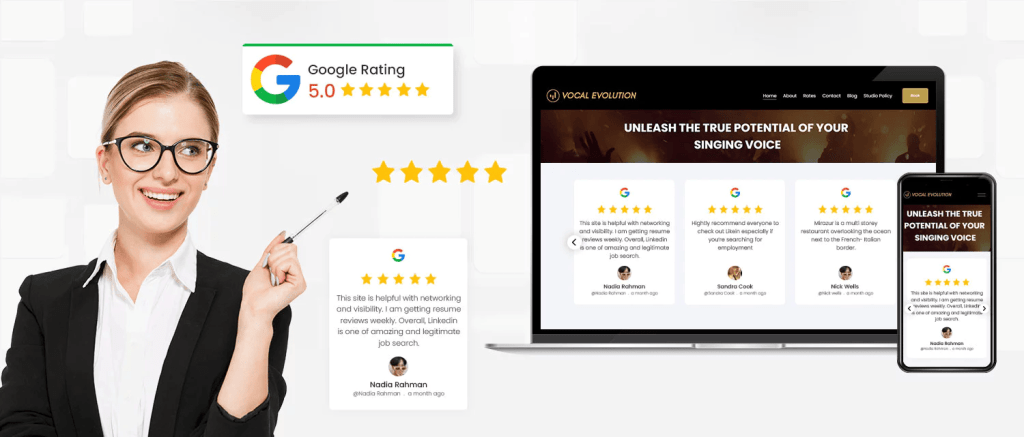
Now that you have an automated system for collecting reviews, it’s time to display them on your website. Embedding Google Reviews directly on your site is a great way to showcase your customer feedback and build credibility with potential buyers.
Embed Google Review Widget
A Google review widget is a simple and effective way to display customer reviews on your website. This widget can automatically pull in Google Reviews and display them in a clean, organized layout that fits seamlessly into your website design.
Benefits of Using a Google Review Widget:
- Increased Trust: Displaying positive Google Reviews directly on your website builds trust with your audience and encourages them to convert.Continuous Updates: The widget automatically updates with the latest reviews, ensuring that your website is always showing fresh, relevant feedback.
- Customizable Layout: Many review widgets allow you to customize the layout, style, and design to match your brand’s look and feel.
Best Practices for Displaying Google Reviews on Your Website
To make the most of your Google Reviews, it’s essential to follow a few best practices when displaying them on your website:
- Highlight Positive Reviews
Focus on showcasing your best reviews—those that highlight the strengths of your product or service. Positive testimonials can drive new customers to take action. By prominently displaying these reviews on your customer review website, you create a compelling case for potential clients to trust your business and make decisions faster. Highlighting satisfied customer feedback can build credibility and attract more attention to your offerings. - Organize Reviews by Categories
If your business offers multiple products or services, consider organizing reviews by category. This allows customers to find the feedback most relevant to their needs. - Use Star Ratings
Star ratings are visually appealing and easy for customers to understand at a glance. Use them prominently alongside written reviews to capture attention and drive trust. - Include Customer Names and Photos (with Permission)
Reviews from real customers with their names and photos lend more credibility to the testimonials. If possible, ask customers for permission to include their photo along with their review to make the testimonials feel more authentic. - Make It Mobile-Friendly
Many users will view your website on mobile devices, so ensure that your Google Reviews embed is responsive. The widget or embedded code should automatically adjust to fit smaller screens for a seamless experience.
Additional Tools to Enhance Your Website with Google Reviews
While embedding Google Reviews is powerful, there are additional tools and strategies you can use to make the most of your customer feedback:
- Social Proof Plugins
Social proof plugins, like WP Customer Reviews for WordPress or Yotpo for e-commerce sites, allow you to showcase customer feedback not only from Google but from various review platforms. These plugins often offer customization options and automatic updates. - Review Aggregators
Using a review aggregator allows you to pull in reviews from multiple sources (e.g., Google, Yelp, Facebook) and display them in one location on your website. This can help build a comprehensive picture of your brand’s reputation. - Email Marketing Integration
Integrate review collection into your email marketing strategy by sending review requests as part of your post-purchase emails. This can encourage more reviews from your existing customers. - Interactive Review Displays
Make your reviews more interactive by allowing visitors to filter, search, or sort them based on criteria like ratings, date, or helpfulness. This can improve the user experience and make your reviews more useful to potential customers. A great way to achieve this is by embedding Google reviews directly on your website. This allows users to access up-to-date and interactive feedback while keeping the process seamless, ultimately enhancing their experience and trust in your business.
Conclusion
Google Reviews are an essential part of any modern website. They serve as valuable social proof, help with SEO, and drive conversions. By using tools to automate Google reviews, embed Google reviews, and implement a Google review widget, you can enhance your website’s credibility and attract more customers. These strategies are also crucial for optimizing your website, ensuring that it not only showcases customer feedback effectively but also ranks higher in search results. Follow the tips outlined in this article to streamline the review process, improve your website’s user experience, and ultimately watch your online reputation grow.
- Builds Trust and Credibility
-
Why YouTube Playlists are Essential for a Streamlined User Experience

In the digital age, where video content dominates online engagement, businesses must focus on delivering a seamless and engaging user experience. One of the simplest yet most effective tools for achieving this on YouTube is the playlist feature. By organizing videos into thematic playlists, businesses can improve audience retention, simplify navigation, and create a cohesive viewing journey.
In this article, we’ll explore why YouTube playlists are vital for a streamlined user experience and how embedding them on your website using a YouTube widget can enhance your content strategy.
What Are YouTube Playlists?
A YouTube playlist is a curated collection of videos grouped around a specific theme, topic, or series. Playlists are easily accessible on your channel and can be shared as standalone links, making them a versatile tool for content organization.
For instance, a business offering digital marketing services might create playlists like:
- “SEO Tips for Beginners”
- “Social Media Marketing Strategies”
- “Case Studies and Success Stories”
This approach makes it easier for viewers to find and consume content relevant to their interests.
The Benefits of Using YouTube Playlists
1. Enhanced Viewer Engagement
Playlists encourage viewers to watch multiple videos in succession, increasing overall watch time. Instead of leaving after watching a single video, viewers are guided toward related content that aligns with their interests.
For example, if a user watches a tutorial on setting up a YouTube channel, a playlist can automatically queue up related videos, such as content creation tips or analytics tools.
By embedding a playlist on your website using a YouTube widget, you can recreate this seamless viewing experience outside of YouTube, keeping your audience engaged for longer.
2. Simplified Navigation
A cluttered video library can overwhelm viewers and deter them from exploring your content. Playlists simplify navigation by grouping videos logically, making it easier for users to find what they’re looking for.
Example:
- A fitness brand can organize workouts into playlists like “Beginner Yoga,” “High-Intensity Interval Training,” and “Post-Workout Stretches.”
- Visitors immediately find the category that matches their fitness level or preference, improving their experience.
When you add a YouTube playlist to your website, this organized structure translates seamlessly, helping visitors quickly locate the content they need.
3. Boosted SEO Performance
YouTube playlists also contribute to better SEO. Grouping videos into playlists increases their discoverability on YouTube, as playlists often rank higher in search results. Additionally, playlists allow you to optimize descriptions and keywords for improved visibility.
Embedding a YouTube playlist on your site extends this benefit by driving traffic between your website and YouTube channel, boosting overall visibility across platforms.
4. Strengthened Branding and Storytelling
Playlists provide an opportunity to showcase your brand’s narrative cohesively. By curating videos that reflect your expertise, values, or products, you strengthen your branding and create a lasting impression.
Example:
- A tech company could create a playlist titled “Innovation at Work,” featuring behind-the-scenes videos, product demos, and customer success stories.
- This curated approach highlights the brand’s story in a structured and engaging way.
Embedding playlists on your website ensures that this branding effort reaches audiences beyond YouTube.
5. Easy Content Repurposing and Sharing
Playlists simplify content repurposing by organizing existing videos into new collections. This makes it easier to promote older content without overwhelming your audience.
Sharing Tip:
- Use playlists in email marketing campaigns or social media posts to direct audiences to specific topics.
- Add playlists to your website’s resource section using a YouTube widget for continuous engagement.
How to Create and Add YouTube Playlists to Your Website
Step 1: Create a Playlist on YouTube
- Log in to your YouTube account.
- Navigate to the “Library” tab and click on “Create Playlist.”
- Add videos to your playlist based on the theme or topic.
- Write a clear, keyword-optimized title and description for the playlist.
Step 2: Generate Embed Code
- Open the playlist and click “Share.”
- Select “Embed” and copy the HTML code provided.
Step 3: Add the Playlist to Your Website
- Paste the embed code into your website’s HTML.
- For dynamic and responsive widgets, use a third-party YouTube widget tool to customize the appearance.
By embedding playlists on your site, you provide visitors with direct access to organized content without requiring them to leave your platform.
Conclusion
YouTube playlists are more than just a tool for organizing videos—they are a powerful way to engage your audience, simplify their viewing experience, and strengthen your branding. By creating thematic playlists and embedding them on your website using a YouTube widget, businesses can ensure their content remains accessible, engaging, and impactful.
Start leveraging YouTube playlists today to transform your video strategy into a streamlined experience your audience will appreciate!
-
Subscribe
Subscribed
Already have a WordPress.com account? Log in now.
 Review Widget